
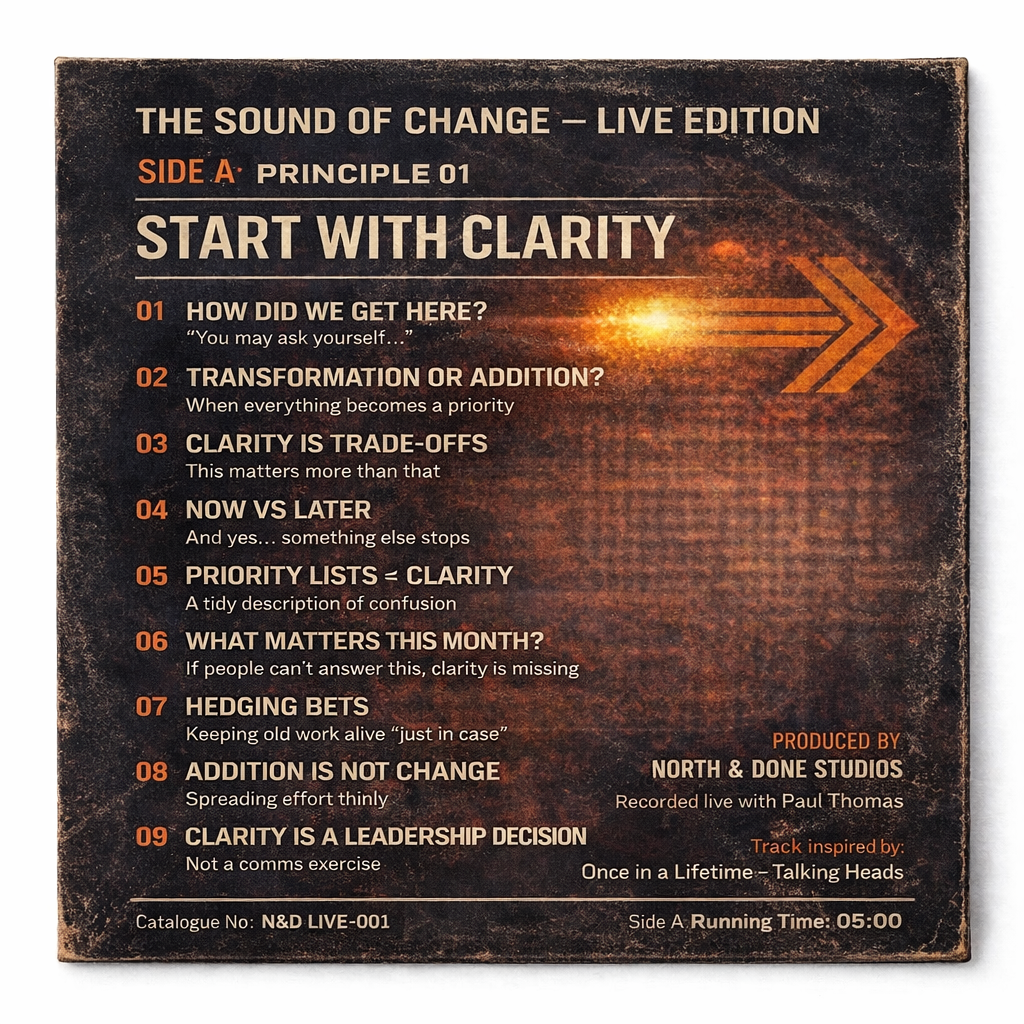
Change has become one of the most overused words in business. Every organisation is “transforming”, every strategy promises “reinvention”, and every leadership team is “accelerating change”.
Yet inside many organisations the experience feels very different. People see new initiatives layered on top of old ones, new language without new behaviour, and new slides without real movement.
Change rarely fails because people don’t care. It fails because we forget something simple but fundamental: change is a human process before it is a strategic one.
Organisations don’t change — people do. And unless leaders take people with them, both intellectually and emotionally, transformation quickly becomes activity rather than progress.
The Pattern Behind Successful Change
Over the years, working in organisations and now through my work with North & Done I’ve seen the same pattern repeat. Some change efforts gain momentum and reshape the organisation, while others stall despite enormous effort.
The difference rarely sits in the strategy. More often, it sits in how the change is led.
From those experiences I’ve been capturing a set of ideas I call my 10 Principles of Change — practical leadership principles that help turn intent into real progress.
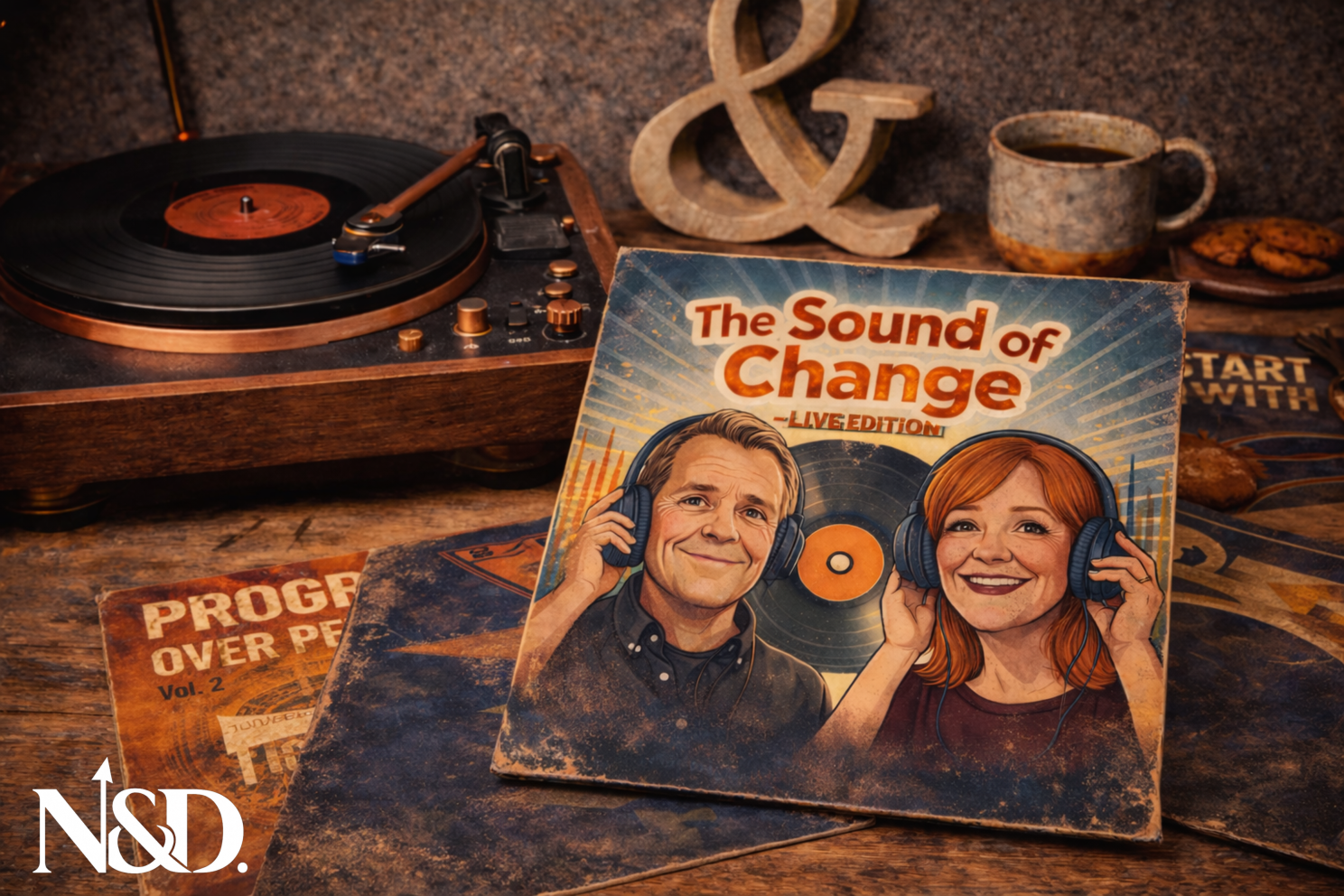
Recently I had the chance to explore some of these ideas in a slightly unusual way. Paul Thomas invited me onto his “The Sound Of” LinkedIn Live series and suggested linking the principles to music to make them more memorable. It turns out music is a surprisingly good way to bring leadership ideas to life, so thank you to Paul for the creative inspiration — and for letting me road-test some of the thinking with his audience.
Five Principles That Make Change Actually Happen
Here are five of my principles that consistently make a difference.
1. People Make It Happen
Strategies don’t deliver change — people do. Real progress happens when individuals feel involved, trusted and responsible for making change work.
The role of leadership is to create the conditions where people feel trusted, where their expertise and initiative is noticed and rewarded, and where leaning in is valued more than simply following the process. Because in the real world, people beat process every single day.
2. Leaders Shape Culture
Culture isn’t what’s written on the wall; it’s what leaders consistently say, reward and tolerate.
People watch leaders closely for signals about what really matters. What gets attention, what gets recognised and what gets quietly ignored quickly becomes the unwritten rulebook of the organisation. If leaders want change to stick, their behaviour has to change first. Culture almost always mirrors leadership.
3. Involve, Don’t Announce
Change sticks when people help build it. Listening early, opening the room and creating shared ownership turns passive audiences into active contributors.
Don’t design the solution behind closed doors and then announce it to the organisation. Technically this is communication, but it rarely creates commitment. Allowing people to challenge and shape the work creates shared ownership. And ownership is one of the most powerful accelerators of change.
4. Momentum Creates Belief
People believe change when they can see it moving. Early wins, visible progress and constant forward motion create confidence and pull others in.
Leaders often assume belief must come first — that people need to be convinced before they act. In reality, the opposite is usually true. When people see something actually shifting, even something small, the mood begins to change. Suddenly the conversation moves from scepticism to possibility. Visible progress builds confidence, confidence builds momentum, and momentum pulls more people into the change.
5. Progress Over Perfection
Waiting for the perfect plan slows everything down. Progress happens through doing, testing and improving in motion rather than polishing slides.
Progress usually comes through doing, testing and improving in motion. Small steps in the real world teach teams far more than endless workshops trying to get everything right in advance.
What Leaders Often Underestimate
One of the biggest misconceptions about transformation is that it is primarily a structural challenge. In reality, it is often a human energy challenge.
Clarity and strategy matter, but what truly shifts organisations is when people begin to believe that progress is possible. That belief spreads when leaders create the right signals: clarity about what matters, permission to move, recognition of progress and involvement rather than instruction. Those signals shape culture far more powerfully than any transformation programme.
Change Is Ultimately a Leadership Act
At its core, change is not a methodology — it is a leadership responsibility. It requires leaders to be clear, human, consistent and visible. It requires involving people early rather than announcing decisions late, and recognising that progress is rarely dramatic but belief builds quickly once people can see movement.
That’s why I’ve been capturing these ideas as a set of album covers for my 10 Principles of Change — a slightly playful way to make the thinking stick. Music has a way of embedding ideas emotionally as well as intellectually, and if it helps leaders remember the principles that actually make change happen, then that’s a good thing.
If you’d like the full set of the 10 Principles of Change, comment “10” and I’ll happily share them.
And thanks again to Paul Thomas for the creative nudge that helped bring some of these principles to life on his “The Sound Of” LinkedIn Live series.
Sometimes the right soundtrack really does help ideas travel further.