
Principles shape change. Delivery builds it.
Most change doesn’t stall because the strategy is wrong. It stalls because no one owns the how. So I think about change through two connected lenses. Principles are the beliefs and behaviours that make change work in the real world. Delivery is what turns them into progress.
Principles without Delivery stay as good intentions. Delivery without Principles becomes process without belief.

The 10 Principles of Change
I developed these from years of seeing the same pattern: big ambitions, smart people and well-intended plans, but change that stalls or never quite sticks. They’re not theory; they’re what consistently works inside complex businesses.
- Start with clarity. Change only works when the destination is clear: the problem, the ambition and the trade-offs.
- Progress over perfection. Waiting for the perfect plan slows everything down. Progress happens through doing.
- Capability is the outcome. The goal is an organisation that keeps improving after the programme ends.
- Useful beats impressive. Solve real problems for real people, not impressive-looking outputs.
- Momentum creates belief. People believe change when they can see it moving.
- People make it happen. Real progress happens when people feel involved, trusted and responsible.
- Leaders shape culture. What leaders say, reward and tolerate is the signal for how change really works.
- Involve, don’t announce. Change sticks when people help build it, not when it’s done to them.
- Learning fuels growth. Teams that test and learn build capability and confidence faster.
- Energy builds energy. When progress is amplified, it pulls more people into the change.
The 9 fundamentals of Delivery
Real change rarely arrives fully formed. It gets built: piece by piece, decision by decision. These are the nine things every change needs in place. Leave one out and the whole thing wobbles. I help you put each one in place, and keep it there.

- Be clear on the what. Lock the problem, opportunity and KPIs so everyone is aligned.
- Make real choices. Prioritise what matters, and be clear on what you won’t do.
- Back it properly. Commit time, money and leadership attention to make it happen.
- Build a core team that owns it. A small, aligned group accountable for driving it forward.
- Mobilise doers and wooers. The people who deliver the work, and the people who bring others with them.
- Manage what lands when. Manage flow, readiness and priorities so work lands at the right time.
- Build capability as you go. Develop skills and confidence through doing, not after the fact.
- Make it real on the ground. Turn plans into practical changes people can see and feel.
- Don’t launch and leave. Embed the change so it sticks beyond the programme.
What changes when it’s working
- Things start going somewhere
- Meetings feel sharper
- Teams trust their decisions
- Work finishes with confidence
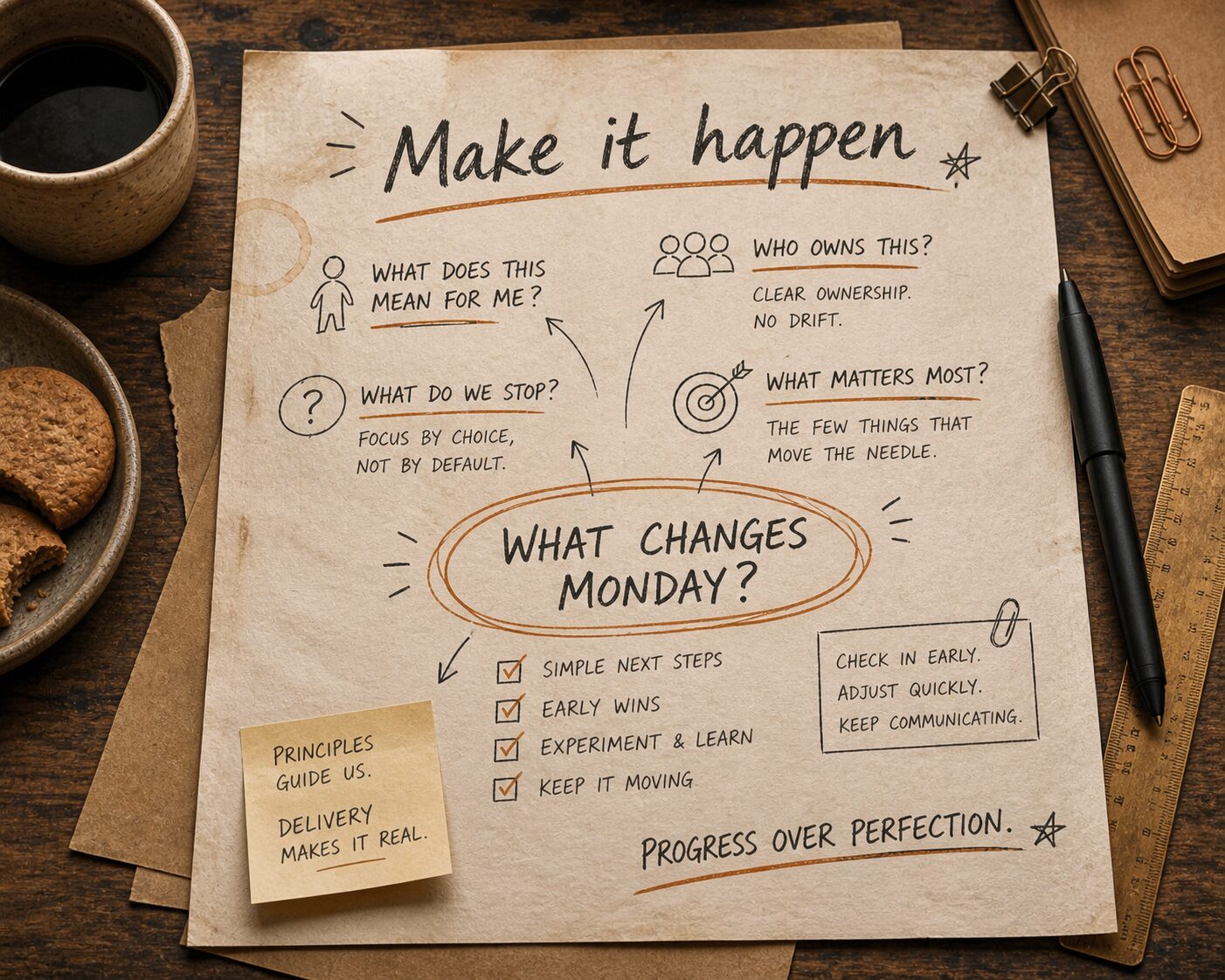
What actually changes on Monday?
It’s the question I keep coming back to, because it cuts through everything else. Most organisations don’t struggle to decide what they want to do. They struggle to turn it into something people can actually act on.